How I got my big break as a video game music composer

I had a wonderful time last week, speaking before a lively and enthusiastic audience at the Society of Composers & Lyricists seminar, “Inside the World of Game Music.”  Organized by Greg Pliska (board member of the SCL NY), the event was moderated by steering committee member Elizabeth Rose and attended by a diverse audience of composers and music professionals.  Also, steering committee member Tom Salta joined the discussion remotely from his studio via Skype.

SCL-GameMusic-Feb2015

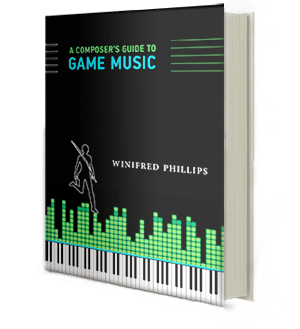
Towards the beginning of the evening, I was asked how I got my first big break in the game industry.  While I’d related my “big break” experience in my book, A Composer’s Guide to Game Music, it was fun sharing those memories with such a great audience, and I’ve included a video clip from that portion of the seminar.

After the event, we all headed over to O’Flanagan’s Irish Pub for great networking and good times at the official NYC SCL/Game Audio Network Guild G.A.N.G. Hang.  I especially enjoyed sharing some stories and getting to know some great people there!  Thanks to everyone who attended the SCL NYC seminar!


Inside the World of Game Music: A Society of Composers & Lyricists Seminar

SCL-GameMusic-Jan2015

I’m happy to announce that I’ll be speaking in New York City on a panel entitled “Inside the World of Game Music.”  The event is hosted by the Society of Composers & Lyricists, and moderated the distinguished NY SCL Steering Committee member Elizabeth Rose.

The panel will consist of myself and game composer Tom Salta, well known for his work on the Ghost Recon and H.A.W.X. series of games.  We’ll be talking about our creative process as game composers.  Here’s the official description of the seminar from the event’s web site:

These days, many top music composers who have been scoring film and TV are lending their talents to our newest media: video games. Using everything from full orchestras to digital instruments, this is a fascinating new creative field which turns the rules of composing sideways. Video games have earned more in revenue than film and TV combined, according to some reports. It is a bright, highly creative and competitive field. Please join us for this entertaining panel led by two of our most successful game composers who will demonstrate how they make musical magic happen in this fascinating “one-click” digital world.

Hosted by the New York chapter of the Society of Composers & Lyricists, this event is part of their ongoing seminar series.  As an organization that supports and champions the interests of music creators, the society offers lots of informational resources that delve into the creative and business aspects of writing music and lyrics for film and television.  They also make efforts to improve workplace and working conditions for their members, encourage a sense of community through the establishment of online forums, and proactively reach out to producers to facilitate productive communication and collaboration with the society’s members.

In 2008, the Society of Composers & Lyricists released a short video describing the mission of the organization.  Here is television composer Dan Foliart, describing the society in his own words when he was the president of the organization:

It’s an honor to participate in the SCL’s seminar series and speak about game music to the New York Chapter!  The event will take place on February 9th, starting at 6:30pm.  If you’d like to attend, you can register here.


Photos from the North American Conference on Video Game Music

I just returned from a fantastic experience as the keynote speaker for the North American Conference on Video Game Music.  The conference was beautifully organized by Professor William Gibbons of TCU.  Here are some photos from the event:

NACVGM-Keynote-Badge

My conference badge for the North American Conference on Video Game Music.  This was my first time as a keynote speaker, and I couldn’t have hoped for a more positive experience.

WP_MoudyHall

J.M. Moudy Hall on the beautiful campus of TCU served as the site of the North American Conference on Video Game Music, and as you can see, we were enjoying ideal weather throughout the conference weekend!

nacvgm-audience1

Here’s a portion of the audience for my keynote address.

NACVGM-Slide-1WP_KEYNOTE_NACVGM

My keynote address was titled, “The Role of Music in Video Game Immersion.”  I explored some topics related to the effects of music on the brain, and how these can facilitate more intense and involving gameplay.  These ideas are also found in chapter three of my book, A Composer’s Guide to Game Music.

NACVGM-Signing_Enoch-Jacobus

After my keynote address, the conference organizer Will Gibbons graciously arranged for me to sign copies of my book for the conference attendees.  The signing took place in the beautiful TCU Barnes & Noble bookstore.

The bookstore was festooned with purple everywhere, and all the TCU merchandize featured the celebrated TCU mascot – the horned frog. Fun fact: the horned frog is also the official reptile of Texas.

In this photo, I’d just arrived at the bookstore, and you can see that one of the conference presenters, Enoch Jacobus, jumped in for an excellent photobomb!  🙂  Keep an eye out for Enoch later on.

Here are some more photos from the book signing:

NACVGM-Signing_TCU-Store

There was a really nice display of my book at the book signing table.

NACVGM-Signing_Daniel-Braunstein

Here’s conference attendee Daniel Braunstein, a student at the University of Michigan.

NACVGM-Signing_Michael-Austin

It was great meeting Michael Austin, an assistant professor of Media, Journalism & Film at Howard University.  At the conference, he presented the talk, “Old Categories for New Media: Rethinking Music Videogame Organology.”

NACVGM-Signing_Cameron-Jordan

This is Cameron Jordan, a music student at TCU.

NACVGM-Signing_Elizabeth-Kirkendoll

Elizabeth Kirkendoll is a musicology graduate student at TCU.

NACVGM-Signing_Kathleen-Kuo

Kathleen Kuo is a doctoral candidate studying ethnomusicology and Central Eurasian Studies at Indiana University Bloomington. She presented the talk, “Hitting Reset: Reception, Replay Value, and the Creative Process of Video Game Cover Music.”

NACVGM-Signing_Enoch-Jacobus-2

And here again is the charismatic Enoch Jacobus, a musicologist who holds a Ph.D. in Music Theory from the University of Kentucky and was just named the new associate editor of Analytical Approaches to World Music. At this year’s conference, Enoch gave a talk about the music of Bioshock Infinite entitled, “Lighter Than Air: A Return to Columbia.”

NACVGM-Signing_Will-Ayers

Will Ayers teaches at the University of Cincinnati College Conservatory of Music. At the conference he presented the talk, “Analyzing Narrative in Video Game Music: Topic Theory and Modular Design.”

NACVGM-Signing_Neil-Lerner

Great to meet Neil Lerner, a professor at Davidson College and one of the conference chairs. He also presented a talk at the conference entitled, “Teaching the Soundtrack in a Video Game Music Class.”

NACVGM-Signing_David-Abad

What a pleasure to meet David Abad, a student at TCU who wasn’t attending the conference but came over to get a signed copy of my book. Thanks for your support, David!

NACVGM-Signing_Dominic-Arsenault

Dominic Arsenault is an assistant professor of video game design and history at the University of Montreal, Canada.  His talk at the conference was “From Atunement to Interference: A Typology of Musical Intertextuality in Video Games.” Also – check out the great Pac-Man tote! 🙂

WP_Audience_TCU_NACVGM

The next day, I was the subject of a Q&A session moderated by Professor Martin Blessinger and sponsored by the TCU Society of Composers.

WP_MB_TCU_NACVGM

Martin Blessinger is an accomplished composer and teaches music theory and composition at TCU.  It was great talking with Martin and the great Q&A audience about such topics as game music production, career building, live performance and issues related to game music study.  Fascinating questions from both Martin and lots of audience members!

WP_TCU_NACVGM

Well, that wraps up this photo blog of my adventure as a keynote speaker at the North American Conference on Video Game Music.  It was a thoroughly fulfilling, rewarding journey, and I learned a ton!  Plus, I met a lot of fascinating people, and I hope these newfound friendships will continue forward into the future.

If you’d like a taste of what it was like to attend, you can read the messages that were live-tweeted during the event at #VGMconference.  Also, a partial transcript of my TCU Society of Composers Q&A is available on Gamasutra.com.  Thanks to Will Gibbons, Martin Blessinger and everyone who made this event a fantastic success.  It was a great conference!

My fellow speakers at the North American Conference on Video Game Music

NACVGM-ProgramCover-sm

The North American Conference on Video Game Music begins this Saturday, and I’m definitely looking forward to giving the keynote speech there!  It will be great to talk about some of the concepts from my book, A Composer’s Guide to Game Music, and  I’m also very pleased that I’ll have the opportunity to meet such a wonderful collection of scholars in the field of game music study.  Since not everyone will be able to travel to Fort Worth for the conference this weekend, I thought I’d provide you with some of the stimulating ideas that will be enlivening the forthcoming conference.  Below you’ll find a collection of links to research papers, articles, essays, PowerPoint presentations and YouTube videos that some of the speakers from the upcoming event have previously created on the subject of video game music.

border-159926_640_white

Guitar Hero: “Not like playing guitar at all”?

by Dominic Arsenault

(Profile on Academia.edu)

Dominic Arsenault is an assistant professor in the fields of video game design, history and musicology at the University of Montreal, Canada.  This weekend he’ll be presenting a paper at the conference entitled “From Attunement to Interference: A Typology of Musical Intertextuality in Video Games.”  Below you’ll find a link to his 2008 research paper from Loading… The Journal of the Canadian Game Studies Association.  This article explores the mechanics of guitar playing in the music simulation videogame Guitar Hero, comparing this gameplay mechanic to the musicianship of playing a real-world guitar.

Link to research paper at the Simon Fraser University Library

border-159926_640_white

Wrap Your Troubles in Dreams: Popular Music, Narrative, and Dystopia in Bioshock

by William Gibbons (Twitter @musicillogical)

William Gibbons is the organizing chair of the North American Conference on Video Game Music, and teaches musicology at Texas Christian University.  This weekend he’ll be presenting the paper “Navigating the Musical Uncanny Valley: Red Dead Redemption, Ni no Kuni, and the Dangers of Cinematic Game Scores” at the upcoming conference in Fort Worth.  Below you’ll find a link to his research paper on the music of the video game Bioshock, as published in 2011 in Game Studies: The International Journal of Computer Game Research.

Link to the research paper in Game Studies: The International Journal of Computer Game Research

border-159926_640_white

Links to Fantasy: The Music of The Legend of Zelda, Final Fantasy, and the Construction of the Video Game Experience

by Julianne M. Grasso (Twitter: @_juliannemarie)

Julianne M. Grasso is currently a doctoral candidate at the University of Chicago, pursuing her degree in music theory.  She’ll be presenting the talk “Intersections of Musical Performance and Play in Video Games” this weekend in Fort Worth.  What follows is a link to a fascinating and entertaining essay she wrote in 2009 about her experience writing her undergraduate thesis on the music of Zelda and Final Fantasy for her music degree from Princeton University.

Link to Essay on the Princeton University Website

border-159926_640_white

Maps and Legends: FPS-Based Interfaces for Composition and Immersive Performance

by Robert Hamilton (Twitter: @robertkhamilton)

Professor Robert Hamilton teaches in the Department of Music at Stanford University, and is also a lecturer at the California College of the Arts on Experimental Game Development.  His presentation this weekend will be “Designing Game-Centric Academic Curricula for Procedural Audio and Music.”  Below, you can read his 2007 paper exploring a new interactive music composition system triggered by a gamer’s position and actions within an in-game virtual space. This paper was presented at the International Computer Music Conference in Copenhagen, Denmark.

Link to Research Paper at the Stanford University Web Site

border-159926_640_white

SOUNDS Like Fun and Games: Exploring the Role and Development of the Video Game Sound and Music Designer

by Christopher J. Hopkins (YouTube: hopkinschris)

Professor Christopher J. Hopkins researches chiptune music while teaching in the music department of Long Island University in New York.  This weekend he’ll be presenting a paper entitled “Compositional Techniques of Chiptune Music.”  Below, you can read an interesting PowerPoint presentation from a speech that Professor Hopkins gave about the discipline of video game sound and music at the 2013 Summer Teaching with Technology Institute.

border-159926_640_white

There’s Always a Lighthouse: Commentary and Foreshadowing in the Diegetic Music of BioShock Infinite

by Enoch Jacobus (Twitter: @enochobus)

Professor Enoch Jacobus’ fields of research include ludomusicology and music theory pedagogy.  He teaches advanced musicianship and orchestration at Asbury University in Kentucky.  At the upcoming Fort Worth conference he’ll be presenting a paper on BioShock Infinite entitled “Lighter Than Air: A Return to Columbia.”  Happily, Professor Jacobus has previously given a speech on the music of BioShock Infinite at the inaugural North American Conference on Video Game Music that took place last year, and we can enjoy that speech via the YouTube video below:

border-159926_640_white

The Origins of Musical Style in Video Games: 1977 – 1983 (Chapter 12 of The Oxford Handbook of Film Music Studies)

by Neil Lerner (Email at Davidson College: nelerner at davidson dot edu)

Neil Lerner teaches a wide assortment of music courses as a professor in the music department of Davidson College in North Carolina. At the conference in Fort Worth this weekend he’ll be giving a presentation entitled “Teaching the Soundtrack in a Video Game Music Class.”  Neil Lerner has been active with several scholarly journals in the field of musicology.  He has served on the editorial board of Music, Sound, and the Moving Image, and is currently the secretary for the Society for American Music.  He also had the honor of holding the position of president of the American Musicological Society-Southeast Chapter.  Below is a link to a chapter he contributed to The Oxford Handbook of Film Music Studies, as excerpted on Google Books.

Link to Chapter on Google Books

border-159926_640_white

Chaos in the Cosmos: The Play of Contradictions in the Music of Katamari Damacy

by Steven B. Reale (Twitter: @StevenBReale)

Steven Reale is a music theorist, ludomusicology researcher, and associate professor at Youngstown State University in Ohio.  At the Fort Worth conference this weekend he’ll be serving as the program chair. Here’s a 2011 research paper he wrote on the music of the video game Katamari Damacy for the journal ACT, published by The Research Institute for Music Theater Studies in Thurnau, Germany.

Link to Research Paper at the University EPub Library Bayreuth

The North American Conference on Video Game Music

nacovgm-border

I’m very pleased to share that I’ll be giving the keynote address at the North American Conference on Video Game Music!  This conference brings together musicologists, music theorists and scholars to study a relatively-new genre in popular music during in an intensive two-day exploration of the art and science of video game scoring, the challenges facing the game composer, the unique characteristics as compared to scores for other entertainment media, and the relationship between the musical content and the mechanics of modern game design.

Last year’s conference sparked great interest and enthusiasm, including a feature article in Wired Magazine, widespread media coverage courtesy of The Associated Press, and a National Public Radio piece entitled “The Study of Video Game Music Gains Recognition.”

This year’s conference program includes many intriguing presentations. Some of the session titles include, “Immersion into what? The sound world of Sid Meier’s Civilization V,” “Navigating the Uncanny Musical Valley: Red Dead Redemption, Ni no Kuni, and the Dangers of Cinematic Game Scores,” “Music Appreciation and the Mario Bros.: The Pedagogy of Musical Hermeneutics,” and “Compositional Techniques of Chiptune Music,” among many others.  The entire conference program can be found here.

Moudy Hall, site of the North American Conference on Video Game Music

Moudy Hall, site of the North American Conference on Video Game Music

A Composer's Guide to Game Music, winner of the Global Music Award Gold Medal for an exceptional book in the field of music.

A Composer’s Guide to Game Music, winner of the Global Music Award Gold Medal for an exceptional book in the field of music.

The conference will take place on January 17th and 18th in Moudy Hall on the TCU University campus in Fort Worth, Texas. I’ll be delivering my keynote address, “The Role of Music in Video Game Immersion,” at the end of the first day of the conference, and I’m looking forward to it!

Right after my keynote I’ll be signing my book, A Composer’s Guide to Game Music (The MIT Press), and it will be great to meet some more wonderful readers and hear about their experiences in the field of game music.  Should be tremendous fun!

On the second day of the conference, I’ll be participating in a TCU Society of Composers Seminar entitled “Composing for Games Q&A with Winifred Phillips.”  Really looking forward to meeting everyone and having a discussion about game music with such an impressive assembly of scholars and game music lovers!

The conference is organized this year by a committee of distinguished academics in the field of musicology:

  • William Gibbons, co-editor of Music in Video Games: Studying Play (Routledge),
  • Neil Lerner, editor of the book series Music and Screen Media (Routledge),
  • Steven Reale, winner of the Dean’s Innovation Award for Scholarship and Creativity from Youngstown State University and presenter of the Tedx talk, “Playing Games and Playing Music,”
  • Karen Collins, author of Game Sound: An Introduction to the History, Theory and Practice of Video Game Music and Sound Design (The MIT Press)
  • James Buhler, co-author of Hearing the Movies (Oxford University Press),
  • Daniel Goldmark, co-editor of The Cartoon Music Book (A Cappella).

Here’s a video that recaps last year’s highly successfully conference:

Thanks so much to the North American Conference on Video Game Music for creating such an outstanding event!


A COMPOSER’S GUIDE TO GAME MUSIC wins a Global Music Award (GMA Book Award)

The Global Music Awards has presented a Gold Medal Award of Excellence as a GMA Book Award this year to the book that has been judged as exceptional in the field of music.  I’m very proud that my book, A Composer’s Guide to Game Music, has received the GMA Book Award!

GlobalMusicAward

As the GMA Book Award winner, A Composer’s Guide to Game Music has been awarded the Global Music Awards medallion.  The GMA medallion was designed for the GMAs by the Northwest Territorial Mint, creators of the official US Presidential Inaugural Medals, the Medal of Honor, the National Medal of Science and the Pulitzer Prize. GMA Awards feature the art of Thomas Hart Benton, who is considered the “Mark Twain” of American art.  The Global Music Awards is an international awards program honoring the music industry through the recognition of unique voices and talented international musical artists.  

Thanks so much to the judging panel of the Global Music Awards for this wonderful honor!  I’m very excited to be a recipient of the GMA Book Award!

Video excerpt from my game music talk at the Montreal International Game Summit

migs_en

Last week, I spoke at the Montreal International Game Summit.  It was a fantastic experience, and I wanted to share a video excerpt of my speech with you!  The speech was called, “Music, the Brain, and the Three Levels of Immersion.”  I’m grateful to Clement Galiay and Nicolas Bertrand-Verge of the MIGS for the opportunity to speak at this great event!  Also, I’d like to give a shout-out to Jean-Frederic Vachon for the tremendous support and encouragement for me to get involved in the MIGS — thanks, JF!!

More about the Montreal International Game Summit:

MIGS was founded in 2004 to meet the needs of the video game sector, which currently represents close to 9,000 workers in Quebec. Ten years later, its mission remains: developing the transfer of knowledge and expertise, increasing exposure for Quebec players abroad and promoting exchanges and communications between stakeholders, making MIGS the East Coast’s leading professional-only event for the games industry.

Talk Description:

Music, the Brain, and the Three Levels of Immersion
Music has the power to deepen player immersion through psychological effects documented in scientific research. This talk explored the influence of music on the brain, and how these effects can aid game designers in meeting the criteria necessary for the “Three Levels of Immersion.”

Jon Burlingame Reviews A Composer’s Guide to Game Music

FMS-Image

I’m very excited to share that my book, A Composer’s Guide to Game Music, has been reviewed by the nation’s leading writer on the subject of music for films and television, Jon Burlingame!  As the most respected journalist in the field of music for visual media, Jon Burlingame writes regularly for Variety, and also contributes to The New York Times, Los Angeles Times, the Washington Post, Newsday, Emmy, Premiere and The Hollywood Reporter.

Illustrious author and journalist Jon Burlingame, receiving a BMI Special Citation of Appreciation award in May 2014

Illustrious author and journalist Jon Burlingame, receiving a BMI Special Citation of Appreciation award in May 2014

His review article about my book appeared in the Film Music Society features section.  He described the book as a “beautifully organized, intelligently written book about music for games,” and said that “gamers as well as composers may be fascinated by her thorough analysis of what music works, and why, in various game genres.”

I’m both humbled and elated by this review, and very happy to share it with you!  You can read the complete review here.

Game Music Talk at the Montreal International Game Summit

MIGS_EN

I’m pleased to be speaking again this year at the Montreal International Game Summit 2014!  My talk this year is entitled “Music, the Brain, and the Three Levels of Immersion.”  It will take place at 4pm on November 11th at the Palais des congrès de Montréal convention center.

The Palais des congrès de Montréal convention center

The Palais des congrès de Montréal convention center

If you’re attending the event this year, please feel free to say hi!  It would be great to meet you!  Also, I’ll be very happy to sign your copy of my book, A Composer’s Guide to Game Music, so please bring it along!  Here’s the official description of my upcoming talk at the Montreal International Game Summit:

Music, the Brain, and the Three Levels of Immersion

Game Music Talk / Game Audio Track – 4pm November 11th – Room 522 – Palais des congrès de Montréal

WinifredPhillips_Illustration_HD

Music has the power to deepen player immersion through psychological effects documented in scientific research. This talk will explore the influence of music on the brain, and how these effects can aid game designers in meeting the criteria necessary for the “Three Levels of Immersion.” According to research, these levels of immersion require specific mental states that music can help the player to achieve. Through a discussion of several scientific studies, the talk will investigate the power of music to alter time perception, deepen our appreciation of visual details, enhance our mental prowess, increase the intrinsic motivation of activities, change our understanding of plot, and enhance both our attention spans and our memory capacity. The talk will also explore the techniques of music composition and implementation that provide practical strategies for composers, audio teams and game designers to maximize the ability of game music to help players achieve total immersion.

Learning Objectives:

  1. Attendees will gain an understanding of the effects of music on the brain, and how music can alter the experience of the player through specific documented effects.
  2. Study data will be discussed, including the “Three Levels of Immersion” from the Conference on Human Factors in Computing Systems (sponsored by the Special Interest Group on Computer-Human Interaction), as well as several research studies on the relationship between music and cognitive function.
  3. Tips and strategies will be explored for the application of practical techniques to exploit the power of music to alter the mental state of the player, thus enabling deeper immersion in the gameplay experience.